
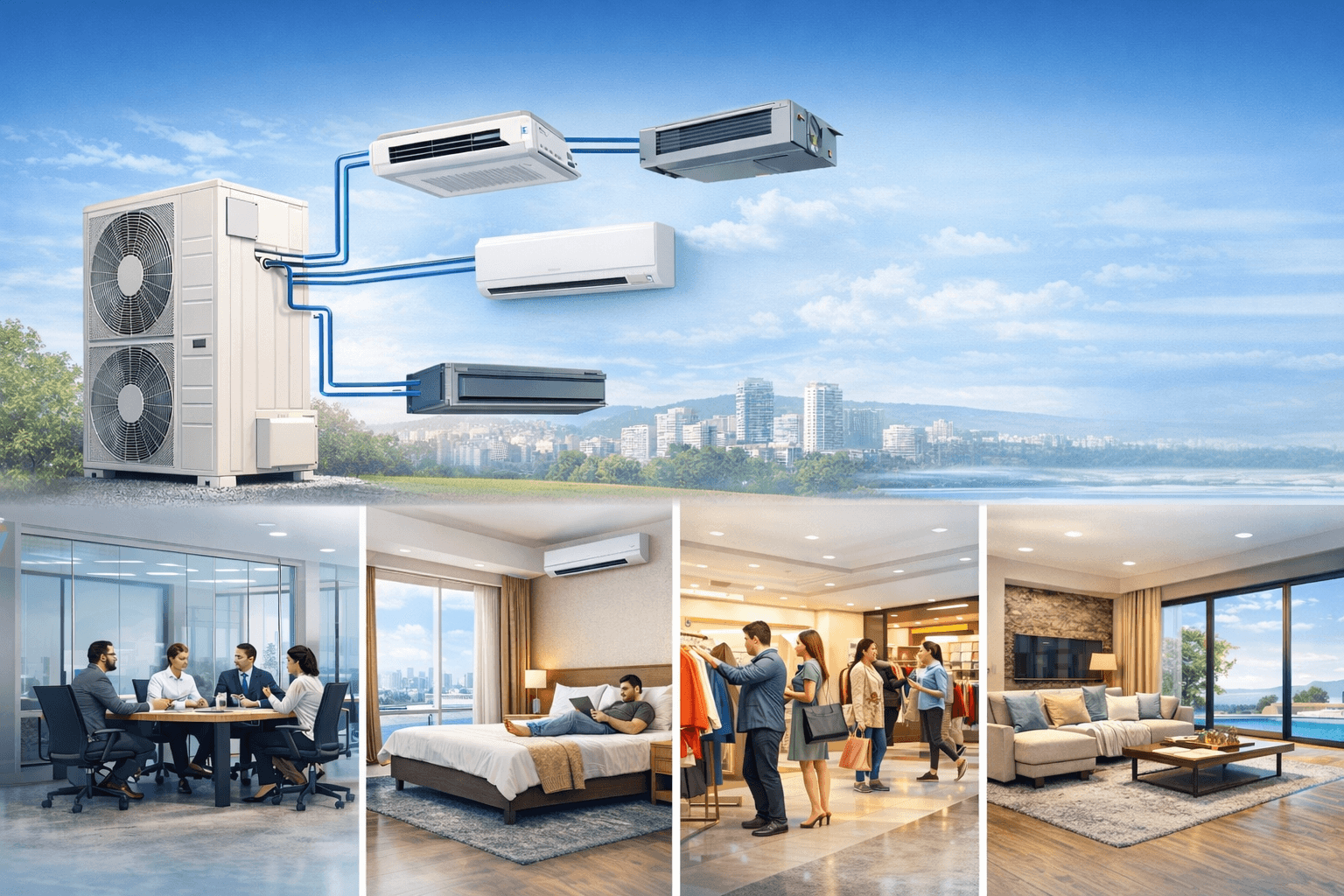
VRF & VRV Systems: When Are They the Right Choice?
Applications, advantages, energy efficiency and alternative solutions for VRF and VRV HVAC systems.
VRF & VRV Systems: When Are They the Right Choice?
VRF (Variable Refrigerant Flow) and VRV (Variable Refrigerant Volume) systems are among the most efficient zoned climate control solutions in modern HVAC technology. They are widely used in medium and large-scale buildings to ensure energy efficiency and optimal comfort balance.
What is a VRF / VRV System?
A VRF system operates based on variable refrigerant flow technology. It automatically adjusts compressor capacity according to the building’s heating and cooling load, preventing unnecessary energy consumption and maintaining stable indoor temperatures.
VRV is simply an alternative name for the same technology. In practice, VRF and VRV systems operate on the same principle and provide multi-zone temperature control.
Main Advantages
- Zoned Control: Individual temperature settings for each room.
- Energy Efficiency: Uses only the required power.
- Stable Comfort: Minimal temperature fluctuations.
- Flexible Design: Various indoor unit options available.
- Long-Term Performance: High efficiency with professional installation and maintenance.
Where Are They Most Suitable?
Offices and Business Centers
Ideal for buildings with varying load requirements across different zones, including meeting rooms and executive offices.
Hotels and Hospitality Facilities
Individual room control enhances guest comfort while optimizing overall energy consumption.
Retail and Commercial Spaces
Zoned temperature balance positively impacts customer experience and operational efficiency.
Premium Residential Projects
Large apartments and villas benefit from both aesthetics and high performance.
When Should Alternatives Be Considered?
For smaller spaces or projects with limited budgets, split or multi-split systems may be more cost-effective. In heavy industrial environments, specialized cooling solutions may be required.
Conclusion
VRF and VRV systems provide energy-efficient, flexible, and long-term HVAC solutions for medium and large buildings. Proper engineering design and professional installation ensure maximum system performance.